How Indraprastha became Delhi
A recent demand by a BJP MP to rename New Delhi as Indraprastha has brought attention to the historical and mythological roots of India’s capital city. The name Indraprastha is deeply associated with the Pandavas of the Mahabharata, making it a symbol of India’s ancient heritage.
But how did Indraprastha, a city tied to legends, transform into the modern metropolis known as Delhi? The story involves centuries of cultural, political, and linguistic evolution, reflecting India’s complex history.
1. Indraprastha in the Mahabharata
Indraprastha is believed to have been the capital of the Pandavas after the division of Hastinapur in the Mahabharata. The city was described as grand, prosperous, and strategically important, symbolizing the victory of dharma.
Although the exact location is debated, historians often associate Indraprastha with the region around modern Delhi, giving the city a mythological significance that resonates even today. The association with the Pandavas makes the name historically and culturally appealing.
2. Early References and the Name Dhillu
Before the name Delhi became common, the region was linked to Raja Dhillu, a ruler believed to have reigned around 2,000 years ago. The city was then sometimes referred to as Dhilli, evolving linguistically over centuries.
These early references show how the city’s name was influenced by local rulers, language shifts, and historical events, providing a bridge from mythological Indraprastha to modern-day Delhi.
3. Delhi Through Ancient and Medieval Times
Over centuries, the city experienced multiple invasions and settlements, resulting in a succession of names. It was referred to as Dhillika, Dhilli, or Dehli during various periods of Indian history.
The area also saw Persian and Turkic influences during the medieval era, further shaping the city’s identity and name. Each ruling dynasty contributed to the linguistic and cultural transformations that eventually standardized the name as Delhi.
4. The Delhi Sultanate and Mughal Influence
The establishment of the Delhi Sultanate in the 13th century reinforced the city’s political significance. Emperors like Qutb-ud-din Aibak and Alauddin Khilji built monumental structures, making Delhi a center of power.
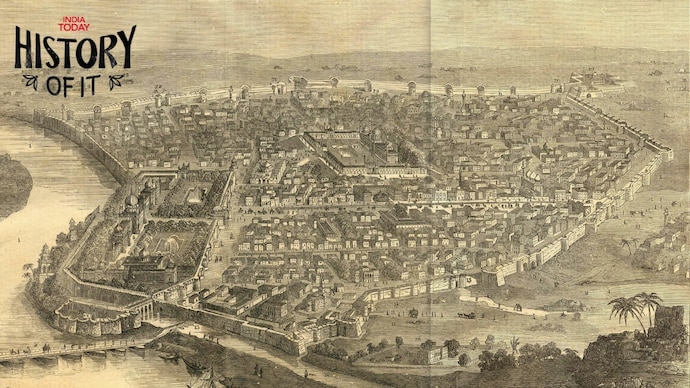
During the Mughal era, the city became synonymous with grandeur and governance. Names like Shahjahanabad were used for parts of the city, but Delhi remained the overarching term used in administration and literature.
5. British Colonial Era and the Rise of New Delhi
When the British established their capital in India, they initially ruled from Calcutta but later shifted to Delhi in 1911. This led to the construction of New Delhi, designed by architects Edwin Lutyens and Herbert Baker.
New Delhi officially became the seat of government, while the older parts of the city continued to be called Delhi. This distinction between Old Delhi and New Delhi solidified the modern name in administrative and international contexts.
6. The Etymology of Delhi
The etymological roots of Delhi are debated, but historians often cite Raja Dhillu as a key source. The name evolved from Dhilli → Dehli → Delhi, influenced by local languages, Persian administration, and British codification.
This etymology shows how the city’s name is a product of multiple eras, blending ancient myths with historical rulers and colonial record-keeping.
7. Cultural and Political Significance of Renaming
The recent proposal to rename New Delhi as Indraprastha is tied to cultural and historical identity. Advocates argue that the name honors India’s ancient heritage and mythological significance, reconnecting modern India with its legendary past.
However, renaming involves administrative, political, and public considerations, and the debate reflects the tension between historical recognition and contemporary identity.
8. Delhi in Literature and Popular Memory
Delhi has been called by many names in literature, from ancient texts mentioning Indraprastha to medieval chronicles using Dhilli. Its rich history is reflected in poems, folklore, and official records.
These literary references keep the city’s layered past alive, allowing citizens and historians to trace the evolution of its name through centuries of cultural change.
9. Modern-Day Identity of Delhi
Today, Delhi stands as India’s political, cultural, and historical capital. The name “Delhi” is widely recognized internationally, symbolizing both modern governance and ancient civilization.
While Indraprastha remains a mythical and historical reference, the city continues to embrace its multiple identities, blending tradition with modernity in architecture, festivals, and governance.
10. Conclusion
The transformation of Indraprastha into Delhi is a story spanning over two millennia, combining mythology, history, and colonial influence. From the Pandavas’ legendary capital to Raja Dhillu’s Dhilli and the establishment of New Delhi, the city’s names reflect its rich and complex past.
The discussion about renaming Delhi as Indraprastha highlights the importance of cultural memory in shaping contemporary India. While Delhi remains the official and globally recognized name, its historical roots continue to connect residents and historians to India’s ancient heritage.
Read More at : engahmedgamal.com