Blog
currency fluctuations in emerging markets, developing countries economy, economic challenges for developing countries, economic outlook 2026, economic trends 2026, emerging markets growth, future of global economy, global economic development, global economic shifts, global economy 2026, global monetary policy, global trade changes, inflation and energy prices, supply chain transformation, technology and economic growth
Yuvi
Global Economic Shifts in 2026 and Their Impact on Developing Countries
The global economy in 2026 is undergoing important transformations influenced by geopolitical tensions, technological advancements, trade dynamics, and changes in financial policies. These shifts are shaping economic opportunities and challenges for countries around the world, particularly for developing nations. As globalization deepens economic interdependence, events in major economies such as the United States, China, and the European Union increasingly affect economic conditions in emerging markets.
Recent global economic projections indicate that the world economy is expected to grow by approximately 2.6%–2.8% in 2026, reflecting moderate but stable expansion despite ongoing uncertainties. At the same time, growth in developing economies is projected to remain stronger than in advanced economies, although it may slow slightly compared with previous years.
For developing countries, these global shifts create both opportunities for growth and risks related to inflation, debt, and external economic shocks. Understanding these changes is essential for policymakers and businesses aiming to adapt to a rapidly evolving global economic landscape.
Table of Contents
ToggleThe Global Economic Outlook in 2026
The global economic environment in 2026 reflects cautious optimism combined with structural challenges. Economic growth across the world is expected to remain steady but slower than historical averages. This situation is partly due to geopolitical tensions, rising public debt, and evolving trade patterns.
Economic projections suggest that global GDP growth could reach around 2.8% in 2026, supported by continued economic activity in large economies such as the United States and China. Meanwhile, developing economies are expected to grow at about 4%, which remains significantly higher than growth in advanced economies.
However, despite this relatively stronger growth, many developing countries still face structural challenges. Studies show that nearly one-quarter of developing economies remain poorer than they were before 2019, highlighting the uneven recovery from recent global disruptions such as the pandemic and supply-chain crises.
This mixed outlook suggests that while global economic expansion continues, it may not be sufficient to significantly reduce income gaps between developed and developing countries.
Rising Energy Prices and Inflation Pressures
One of the most important economic developments in 2026 is the rise in global energy prices. Geopolitical tensions and supply disruptions in key oil-producing regions have led to significant increases in crude oil prices, creating inflationary pressures across the world.
In early 2026, oil prices surged above $100 per barrel, driven partly by geopolitical conflicts and supply limitations. This increase has raised concerns about global inflation and economic stability.
Developing countries are particularly vulnerable to rising energy prices because many of them depend heavily on imported oil and gas. Economies that rely on imported energy may experience higher production costs, increased transportation expenses, and rising consumer prices.
Higher energy prices can also widen fiscal deficits, as governments often increase subsidies for fuel and food to protect citizens from rising living costs. As a result, inflation can slow economic growth and place additional pressure on government budgets.
Monetary Policy and Global Interest Rate Changes
Another key economic shift in 2026 involves changes in global monetary policy. Central banks around the world are adjusting interest rates in response to inflation trends, economic growth, and financial stability concerns.
Many developed economies are expected to gradually reduce policy interest rates as inflation begins to moderate. Financial analysts predict that the policy rate in major economies may decline gradually as price pressures stabilize.
However, emerging markets face a more complex situation. Rising energy costs and currency volatility have forced some developing-country central banks to maintain higher interest rates to control inflation.
Higher interest rates can make borrowing more expensive for governments and businesses in developing countries. This situation may slow investment, limit infrastructure development, and increase debt burdens, particularly for countries that rely heavily on external financing.
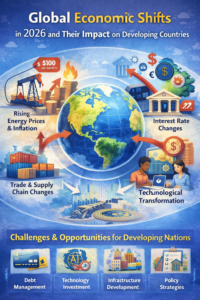
Trade Dynamics and Global Supply Chain Changes
Global trade patterns are also undergoing significant changes in 2026. Trade tensions, technological competition, and shifting supply chains are reshaping the structure of international commerce.
After years of disruptions caused by pandemics and geopolitical conflicts, many countries are reorganizing supply chains to reduce dependency on specific regions. This shift has created both opportunities and risks for developing countries.
On one hand, emerging economies can benefit from new manufacturing investments as companies diversify production locations. On the other hand, trade uncertainties and policy changes may reduce export demand for some developing nations.
Furthermore, the pace of global trade growth is expected to slow slightly in 2026 as earlier supply-chain adjustments begin to stabilize.
For developing countries that depend heavily on exports, this slowdown may affect economic growth and employment in manufacturing and commodity sectors.
Currency Fluctuations and Financial Stability
Currency fluctuations are another major economic factor affecting developing countries in 2026. Strengthening of major global currencies, particularly the U.S. dollar, has created financial pressures for emerging markets.
When the dollar strengthens, the cost of servicing foreign-denominated debt increases for developing economies. At the same time, local currencies may weaken, which can increase the price of imported goods and contribute to inflation.
Recent financial developments show that several emerging-market currencies have weakened due to rising oil prices and shifting global investment flows.
These currency fluctuations can create economic instability, especially in countries with high external debt or limited foreign-exchange reserves. Governments must therefore carefully manage fiscal and monetary policies to maintain financial stability.
Opportunities from Technological Transformation
Despite these challenges, technological innovation offers significant opportunities for developing countries in 2026. Rapid progress in digital technologies, artificial intelligence, and financial innovation is transforming global economic structures.
Many developing nations are investing in digital infrastructure, online services, and technology-driven industries to accelerate economic growth. These innovations can increase productivity, create new employment opportunities, and improve access to financial services.
Additionally, global investment in emerging technologies such as artificial intelligence is expected to contribute to economic growth and productivity improvements worldwide.
For developing countries, embracing digital transformation can help reduce economic disparities and strengthen integration into the global economy.
Policy Strategies for Developing Countries
In response to global economic shifts, policymakers in developing countries must adopt strategic economic policies to ensure sustainable growth. Strengthening domestic industries, improving financial systems, and expanding infrastructure investment are critical priorities.
Governments can also focus on diversifying their economies to reduce dependence on commodities or a limited number of export sectors. Investments in education, technology, and entrepreneurship can help build more resilient economies.
International cooperation and regional trade agreements may also help developing countries expand market access and attract foreign investment.
By implementing forward-looking policies and strengthening economic institutions, developing nations can better adapt to global economic changes and maintain long-term development.
Conclusion
The global economy in 2026 is characterized by moderate growth, evolving trade patterns, rising energy prices, and significant technological transformation. These global shifts have profound implications for developing countries, shaping both economic opportunities and policy challenges.
While developing economies are expected to continue growing faster than advanced economies, they face vulnerabilities related to inflation, currency fluctuations, and external economic shocks. At the same time, technological innovation and global investment trends provide new pathways for economic development.
Ultimately, the ability of developing countries to navigate these global economic shifts will depend on effective policymaking, investment in human capital, and integration into emerging global markets. By adapting to changing economic conditions and embracing innovation, developing nations can strengthen their economic resilience and build a more sustainable future in the evolving global economy.
Read more : whitesystemz.com
Tag
currency fluctuations in emerging markets developing countries economy economic challenges for developing countries economic outlook 2026 economic trends 2026 emerging markets growth future of global economy global economic development global economic shifts global economy 2026 global monetary policy global trade changes inflation and energy prices supply chain transformation technology and economic growth