“Cut Off the Head of the Snake”: US Strike Obliterates IRGC Headquarters in Iran
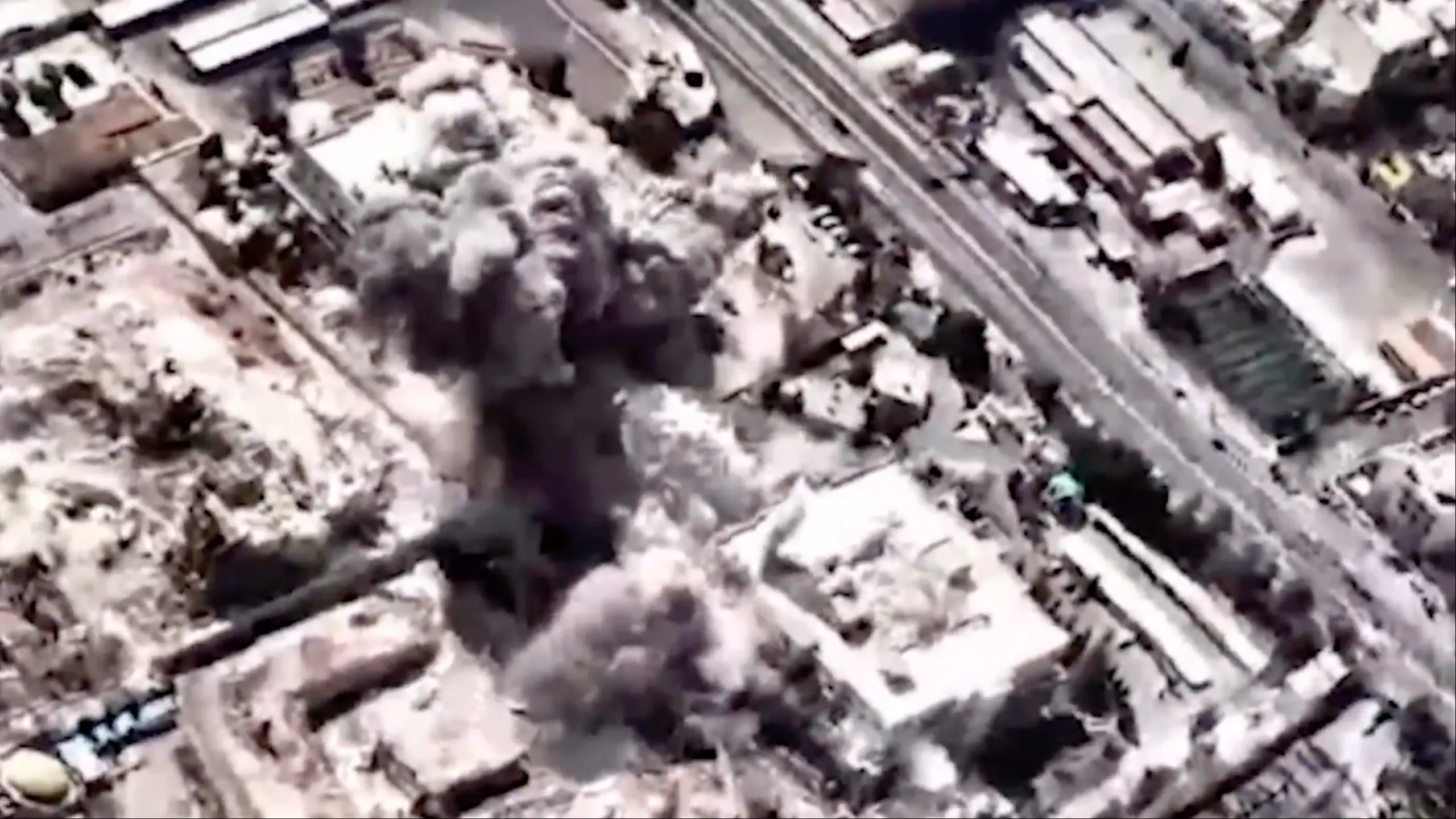
In a major escalation of the ongoing conflict between the United States and Iran, the United States Central Command (CENTCOM) announced that a precision strike had destroyed the headquarters of the Islamic Revolutionary Guard Corps (IRGC) in Tehran — a symbolic and strategic blow that U.S. military leaders described as having “cut off the head of the snake.” This statement underscores the significance the U.S. places on dismantling what it considers a principal instrument of Iranian military power, and reflects the deepening crisis in the Middle East involving multiple state and proxy actors. The announcement was accompanied by the release of video footage showing the moment when the Iranian headquarters was reduced to rubble.
Overview of the Strike and Its Significance
CENTCOM’s announcement confirmed that the headquarters of Iran’s elite military force, the Islamic Revolutionary Guard Corps (IRGC), had been obliterated in a large‑scale U.S. military strike. In official statements, U.S. military leadership claimed the operation successfully destroyed IRGC command infrastructure and degraded its ability to coordinate further operations. The phrase “cut off the head of the snake” was specifically used to convey that the IRGC — long viewed by U.S. officials as a significant threat to American forces and interests — no longer possessed a central command hub.
CENTCOM also stated that the IRGC had historically been responsible for the deaths of more than 1,000 Americans over the past several decades, providing part of the rationale for the operation’s intensity. The U.S. military released video footage purportedly filmed during the strike, showing a missile fired from a naval vessel striking the IRGC Joint Headquarters in Tehran and causing widespread destruction.
The IRGC, formed after the 1979 Islamic Revolution to protect Iran’s Islamic system and serve as an independent military force parallel to the regular army, operates directly under the supreme leadership’s authority. Its basing and command infrastructure have for years been central to Tehran’s military strategy at home and abroad. Destroying the headquarters is seen as both a tactical setback for Iran and a symbolic message about U.S. military resolve.
Context Within the Broader Conflict
The destruction of the IRGC headquarters did not occur in isolation. It was part of a massive, coordinated campaign — commonly referred to by U.S. and allied forces as Operation Epic Fury — in which U.S. and allied aircraft, naval vessels and precision‑guided munitions have struck dozens of strategic sites across Iran. These targets have included missile sites, radar installations, command and control centres, naval assets, and other infrastructure deemed critical to Iran’s military operations.
The announcement of the IRGC headquarters’ destruction came during a period of intense hostilities, including the reported death of Iran’s Supreme Leader and multiple senior commanders, as well as widespread retaliatory missile and drone strikes by Iran against U.S. and allied forces stationed in the Gulf region. These developments have collectively transformed a series of tensions into one of the most significant military conflicts in the region in decades.
Video Release and Military Messaging
The release of video footage by the U.S. Central Command was a deliberate element of the communication strategy surrounding the strike. Such visual documentation serves several purposes: it provides public evidence of the strike’s execution and impact, reinforces the narrative conveyed by military leadership, and signals to both domestic and international audiences that the U.S. retains the capability and will to conduct precision operations.
In the footage, a missile — widely reported to have been fired from a U.S. naval vessel — can be seen approaching a complex of buildings, which explode shortly after impact. Subsequent shots show smoke, fire and collapse, illustrating the strike’s destructive effect on key structures. CENTCOM’s accompanying text emphasised that the IRGC “no longer has a headquarters,” an assertion meant to underline the operation’s perceived strategic success.
Implications for Regional Dynamics
The IRGC is a central pillar of Iran’s military and political influence in the Middle East. Beyond its internal security role, the IRGC has long supported proxy groups and maintained significant operational footprints in countries such as Iraq, Syria, Lebanon and Yemen. Weakening the IRGC’s central command structure could disrupt its ability to coordinate complex, long‑range operations, and influence proxy networks. However, experts caution that Iran’s decentralised military cells and allied militias may adapt or compensate, meaning the organisation’s operational impact may persist beyond the loss of a physical headquarters.
Furthermore, the strike risks provoking further retaliation. Iran has already responded to earlier strikes with missile and drone operations targeting U.S. and allied interests across the Gulf, including bases in the region and potentially strategic maritime routes. The destruction of the IRGC headquarters, therefore, adds another layer of complexity to an already volatile security environment, raising concerns about escalation and wider regional destabilisation.
International and Diplomatic Reactions
Reactions to the strike have varied widely among global actors. Some U.S. allies welcomed the operation as a necessary defense against perceived threats emanating from Iranian military networks. Gulf states hosting American and allied forces have been navigating their own security calculations, balancing cooperation with Western partners and managing domestic sensitivities about the conflict’s impact. Meanwhile, several nations have called for restraint, urging all parties to work toward de‑escalation and diplomatic negotiation before the conflict spreads further.
Iran’s official response to the specific claim of the IRGC’s headquarters being destroyed has been limited, with Iranian authorities more broadly acknowledging that their military command structure has been challenged and disrupted amid ongoing hostilities. Iran’s foreign ministry framed this as part of a broader confrontation with external powers and emphasised that decentralised units are operating under pre‑existing orders, implying an attempt to preserve operational capability despite setbacks.
Humanitarian and Civilian Impact
The military operations in the region have not been confined solely to isolated military sites. Counter‑strikes, retaliatory clashes and air defence responses have led to civilian casualties and infrastructure damage across multiple countries. The escalation surrounding the IRGC headquarters strike feeds into a broader humanitarian concern, with reports of significant casualties in various theatre locations, disruptions to basic services, and increased displacement. While precise figures are difficult to verify independently, the cumulative toll underscores the acute human cost of ongoing hostilities.
Interpreting the Symbolism: “Head of the Snake”
The phrase “cut off the head of the snake” carries symbolic weight. It suggests that by targeting a central command node, the operation has significantly degraded the opponent’s ability to function centrally. In military doctrine, decapitating strikes aim to disrupt enemy decision‑making and command cohesion. However, such strikes do not guarantee the collapse of an adversary’s capabilities; they may instead prompt decentralised adaptation or broader mobilisation in response. In practice, the degree to which the IRGC’s operational coherence is affected will become clearer as events unfold in the coming days and weeks.
Conclusion: A Defining Moment in an Escalating Conflict
The U.S. military’s statement that it has destroyed the IRGC headquarters and effectively “cut off the head of the snake” in Tehran represents a dramatic milestone in the expanding US‑Iran confrontation. This strike reflects a strategic intent to diminish Iran’s military coordination capacity and impose a significant operational setback. At the same time, it highlights the deepening complexities of the conflict, with ongoing military exchanges, regional proxy involvement and broader geopolitical ramifications. As the situation continues to evolve, the world faces the challenge of managing a volatile confrontation with implications that extend far beyond a single military target.
Key Developments at a Glance
-
The United States announced the destruction of the IRGC headquarters in Tehran, describing it as cutting off “the head of the snake.”
-
CENTCOM released video footage of the strike showing missile impact and building collapse.
-
The IRGC loss is part of a larger conflict involving U.S. and allied operations in Iran under Operation Epic Fury.
-
Regional tensions and retaliatory strikes continue as part of the broader Middle East crisis.
Read More at: whitesystemz.com