Cultural Exchange and Globalization in the Modern World
In today’s interconnected world, cultural exchange and globalization have become powerful forces shaping societies, economies, and everyday life. Advances in technology, transportation, and communication have made it easier for people from different parts of the world to interact and share ideas, traditions, and values. Cultural exchange refers to the process through which cultures interact and influence one another, while globalization represents the increasing integration of economies, societies, and cultures across national boundaries. Together, these processes have transformed how people live, work, and understand the world around them.
Table of Contents
ToggleUnderstanding Cultural Exchange
Cultural exchange occurs when individuals or groups from different cultures share customs, beliefs, languages, art, food, and traditions. This exchange may happen through travel, education, migration, international trade, or digital communication. Cultural exchange allows people to learn from each other and appreciate diversity while building mutual respect and understanding. Over time, such interactions lead to the blending of cultural elements, creating new forms of cultural expression. Festivals, music, cuisine, fashion, and literature often reflect influences from multiple cultures, demonstrating how cultural exchange enriches societies.
The Role of Globalization in Cultural Interaction
Globalization has significantly accelerated cultural exchange by removing geographical and economic barriers. With the rise of global trade, multinational corporations, and international media, cultural ideas spread rapidly across borders. Globalization enables people to experience different lifestyles, traditions, and entertainment forms without leaving their own countries. Television, films, online platforms, and international travel have created a global cultural network where ideas circulate continuously. As a result, people around the world are more aware of other cultures and more open to adopting new practices and perspectives.
Technology as a Driver of Cultural Exchange
Modern technology has become one of the most influential tools in promoting cultural exchange. The internet, social media platforms, and digital communication tools allow individuals from different countries to connect instantly. People can share their cultural experiences, traditions, and stories through videos, blogs, and online communities. Educational platforms and virtual collaborations also enable students and professionals to learn about other cultures in real time. Technology has therefore created a global digital space where cultural ideas can spread quickly and reach millions of people.
Impact on Language and Communication
Cultural exchange and globalization have significantly influenced language and communication. As people interact across borders, languages borrow words and expressions from each other. Global communication has also increased the use of widely spoken international languages in business, education, and diplomacy. At the same time, local languages continue to play an important role in preserving cultural identity. The interaction between global and local languages illustrates how cultural exchange can both unify people and maintain diversity within societies.
Influence on Food, Art, and Lifestyle
One of the most visible effects of cultural exchange is seen in food, art, and everyday lifestyle. International cuisines are now widely available in many countries, allowing people to experience dishes from different parts of the world. Similarly, art, music, and fashion often blend traditional and global influences. Artists and designers draw inspiration from various cultures, creating innovative styles that appeal to a global audience. These cultural combinations demonstrate how globalization encourages creativity and cultural diversity while shaping modern lifestyles.
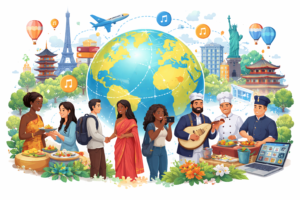
Benefits of Cultural Exchange
Cultural exchange offers several important benefits for individuals and societies. It promotes understanding, tolerance, and respect among people from different backgrounds. By learning about other cultures, individuals become more open-minded and better prepared to interact in a diverse world. Cultural exchange also supports innovation by allowing ideas from different traditions to combine and create new solutions. In education, international collaborations help students develop global perspectives and skills needed for the modern workforce. These advantages highlight the positive role cultural exchange plays in building peaceful and cooperative societies.
Challenges and Cultural Preservation
Despite its benefits, globalization and cultural exchange also present certain challenges. Some critics argue that the spread of dominant global cultures may threaten local traditions and cultural identities. Smaller communities may struggle to preserve their heritage as global media and commercial influences become more widespread. In response, many societies are working to protect traditional languages, arts, and customs while still participating in global interactions. Balancing cultural preservation with openness to new influences remains an important challenge in the modern world.
The Role of Education and Cultural Programs
Educational institutions and cultural organizations play a vital role in encouraging positive cultural exchange. Student exchange programs, international conferences, and cultural festivals allow people to experience different traditions firsthand. Museums, art exhibitions, and cultural centers also help preserve heritage while introducing audiences to global perspectives. These initiatives foster dialogue and cooperation among nations while helping individuals understand the richness of human culture.
Cultural Exchange in Business and the Global Economy
Globalization has made cultural understanding an essential part of international business. Companies operating in multiple countries must adapt to different cultural norms, communication styles, and consumer preferences. Cultural awareness helps organizations build strong relationships with international partners and customers. Businesses that respect cultural diversity are often more successful in global markets because they understand the values and expectations of different communities.
Conclusion
Cultural exchange and globalization have become defining features of the modern world. Through technology, travel, trade, and communication, people from diverse backgrounds interact more frequently than ever before. These interactions create opportunities for learning, creativity, and cooperation while also raising important questions about cultural preservation and identity. By promoting respect for diversity and encouraging meaningful dialogue between cultures, societies can harness the positive potential of globalization while protecting the traditions that make each culture unique. In this way, cultural exchange can continue to strengthen global connections and contribute to a more understanding and interconnected world.